
Choosing the Right Spandex Yarn: Common Varieties and Their Applications
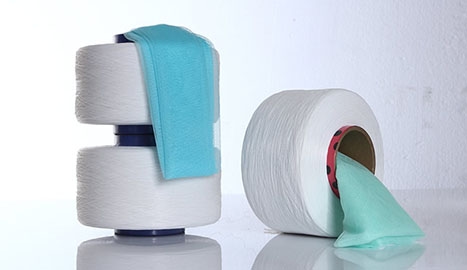
What is Spandex?
The “Second Skin” of Modern Fashion
Spandex, also known as Elastane or Lycra, is a synthetic polyurethane fiber (a linear polymer containing over 85% polyurethane segments). It is chemically synthesized through the polymerization of PTMEG and MDI.
Renowned for its extraordinary elasticity and recovery, spandex is an essential industrial material in the modern garment industry. Fabrics blended with spandex are comfortable, form-fitting, and highly resilient—earning it the reputation of being the “Second Skin” for humans.
In the textile trade, spandex is rarely used alone. Instead, it is processed into various yarn types to suit different manufacturing needs. Here are the four primary types of spandex yarn:
1. Bare Spandex Yarn (Bare Yarn)
Bare yarn was the earliest form of polyurethane elastic fiber developed. It is available in two forms: low-denier monofilament and high-denier multifilament.
Characteristics: It has a high friction coefficient and poor sliding properties, making it difficult to weave directly in its raw state.
Applications: It is typically interweaved with other synthetic filaments (like Nylon or Polyester) on knitting machines.
Best For: Tight-fitting garments, activewear, compression hosiery, and medical bandages.
https://xmbeingnew.com/product/spandex-bare-yarn-560d-840d-for-narrow-fabrics/
2. Covered Spandex Yarn (SCY & DCY)
Covered yarn (also known as wrapped yarn) involves a spandex core wrapped spirally by a non-elastic filament or yarn.
Single Covered Yarn (SCY): The core is wrapped by one layer of outer yarn. It is widely used for socks and weft-knitted underwear.
Double Covered Yarn (DCY): The core is wrapped by two layers of yarn in opposite directions. This results in a thicker, stiffer hand-feel and superior durability.
Applications: Heavy-duty elastic fabrics, waistbands, leg warmers, and high-end pantyhose.
3. Core-Spun Spandex Yarn (CSY)
Core-spun yarn is the most widely used variety in the textile industry. It uses spandex as the “core” and is wrapped by short staple fibers like cotton, wool, acrylic, or polyester.
Characteristics: The spandex core is almost entirely hidden by the outer fibers. This allows the yarn to provide excellent stretch while maintaining the natural look and feel (the “appearance characteristics”) of the outer fiber.
Applications: Stretch denim, casual wear, and high-quality knitwear. It is the “gold standard” for comfort and aesthetics.
4. Twisted Spandex Yarn
This yarn is created by drafting the spandex while twisting it together with two other non-elastic yarns.
Pros & Cons: It offers excellent evenness and a clean finish, making it ideal for thick, heavy-duty fabrics. However, it can be prone to color differences (shading) during the dyeing process.
Applications: Generally used for coarse fabrics and textured textiles. Note: It is usually avoided for deep-colored or dark fabrics due to dyeing sensitivities.
Choosing the Right Spandex for Your Project
Whether you are looking for the breathability of Core-spun yarn or the high compression of Double-covered yarn, understanding these materials is key to superior textile manufacturing.
Are you looking for high-quality Spandex yarn for your next collection? As a professional textile supplier, we provide a full range of spandex solutions tailored to your specific needs.
Contact us today for a quote or free samples!